12 Reasons Why Aakash May Soon Be Doomed!


The cheapest tablet meant for students has very basic tech specs, which may not even be of help for students.
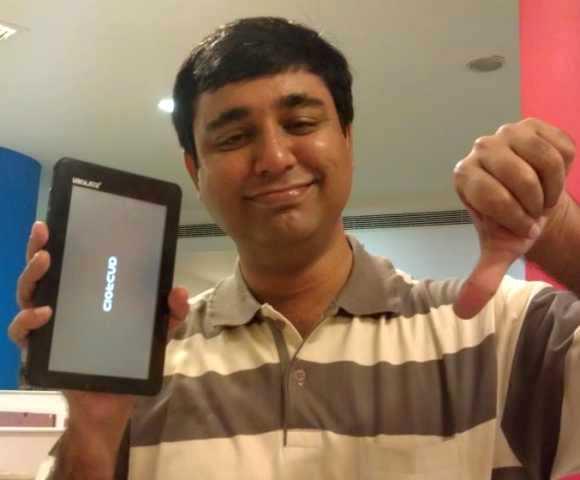

Friday, January 13, 2012: Well, we have all been hearing about the world's cheapest tablet Aakash being sold out. More than 1.5 million units of the device have already been ordered. Despite all the hype that has been created around the device since its very launch, doubts have started to trickle in about its performance and durability. According to industry experts, technical flaws, total cost of procurement and no hands-on experience have resulted in disappointment for its over-excited buyers. A few buyers who got the tablet can just rejoice to be the early users of the cheap tablet.


Despite all odds, a second version of the device--Ubislate+, with hopefully better tech specs--is already in production and is expected to be out soon. It will have a SIM card slot to support phone calls as well.


Here are 12 reasons why Aakash tablet is not up to the mark and can be a complete failure in the market...


Pricing: The famous $35 tablet, available for around Rs 2,500 in the Indian market, is actually not cheap as it is said to be. Though it sports a price tag of Rs 2,500, if somebody buys a 4GB or an 8GB microSD card with it the charges will go up by Rs 500 to Rs 800. A pair of earphones (tablet does not come with earphones) will come at a price of Rs 400. So the price of the tablet along with basic accessories will touch Rs 4,000. 

Low on memory and storage: Aakash has a 256 MB RAM and 2GB internal storage, which means a user can hardly store two movies and a few songs in the tablet. Users can increase the memory storage to 32 GB but a microSD card of 8GB itself costs an extra Rs 800, which will escalate the price of the tab to around Rs 3,500, defeating the sole purpose of an affordable tablet.

Low-quality processor: The tablet has a very basic 336 MHz processor, which is even lesser than the processors in the cheapest Android mobiles. The tablet runs Android operating system, which needs enough memory to run applications and graphics. Thus, a user will not be able to perform multiple tasks on the tablet as the processor will not support them.

Display issues: The screen resolution of the tablets is very bad as it has no high-definition output. The tablet reflects light and even at its maximum brightness levels, it is unable to display things properly on its screen in bright surroundings. The usage of the tablet will be restricted to close doors and not under the sun, says a report by ZEE News.

Low battery back up: Aakash does not even have proper battery back-up to last long for students. As the tablet has a large screen as compared to smartphones, which have a mere 7.6-cm (3-inch) to 8.9-cm (3.5-inch) display and a battery of 1500 mAh. Aakash comes with a 2100 mAh battery and since it has a bigger screen, the battery is not enough for the device. According to the makers of Aakash, Datawind, the tablet has a battery back up of 3 hours but the firm does not specify the kind of usage that is possible in that duration.

Heats up quickly: The device is said to heat up quickly as it has a low-end processor, which is not for multi-tasking on the tablet. People who have used the tablet have confirmed that the device heats up within an hour while browsing or using the WiFi.

Resistive touchscreen: Aakash offers a resistive touchscreen at a time when even most of the low-cost smartphones have a capacitive touchscreen these days. But even the resistive touchscreen of Aakash is way too bad, specially when dragging any item on the screen. Even if an icon is to be selected, the resistive touch seems to be a problem.

Does not support Bluetooth: The tablet currently does not support any version of Bluetooth.

No support for hardware upgrade: Users will have a problem in installing third-party applications on Aakash as most of the applications need at least the Android 2.3 version, while Aakash runs Android 2.2 OS. Also, hardware upgrade would be a tough task with the 366 MHz processor.

No access to Android Marketplace: Aakash lacks the best feature of an Android operating system--the Android Marketplace. This would limit the usage to the pre-installed apps on the tablet. The target buyers of the tablet would hardly know how to install the apps separately.

Lacks external speakers: The Aakash tablet does not have external speakers and does not even come along with earphones. The users would have to make extra investment of Rs 400 to buy decent earphones for audio output.

Poor network connectivity in India: Though Aakash does have a Wi-Fi connection but it will hardly be of any use in India, specially in rural areas, where connectivity will be an issue. 


Source   

Interview with Bill Gates-Transcript (One of the rare Interviews).

Australian Broadcasting Corporation Broadcast: 15/12/2011
==========================================
Reporter: Scott Bevan


Scott Bevan speaks with Microsoft founder Bill Gates in a rare interview.

Transcript


CHRIS UHLMANN, PRESENTER: He's the software engineer who helped drive the personal computer revolution and his company Microsoft conquered all before it and Bill Gates became one of the richest people in the world. But Bill and his wife Melinda have committed to giving away over 90 per cent of their wealth, and he hopes that's another idea that will conquer the world.

Today, Scott Bevan sat down with Bill Gates for a rare interview.

SCOTT BEVAN, REPORTER: Bill Gates, welcome and thank you for your time.

BILL GATES, PHILANTHROPIST: Great to be here.

SCOTT BEVAN: Now, a few years ago at the World Economic Forum, you described yourself as an optimist, but an impatient optimist. Now, bearing in mind those two words: impatient and optimist, whey have you pursued trying to eradicate stubborn diseases and trying to enlist the help of sometime stubborn political leaders?

BILL GATES: Well the improvement in health over the last 50 years is one of the great miracles of development. 50 years ago, over 20 million children died every year. And last year that was down below eight million. And the reason for that is that we invented great vaccines and then we had the generosity through aid programs to make them available to even the poorest.

SCOTT BEVAN: Now in your former life with Microsoft, you brought about or helped bring about radical change, global change, fairly rapidly. With that experience, with that thinking that would have developed through that process, how much is it a blessing, how much is it a curse in what you're dealing with now, takes time and change comes much slower? 

BILL GATES: Well I think the IT industry at times does move very quickly, but we founded Microsoft back in 1975 and the personal computer revolution I don't think was evident to the population at large for over 20 years. And, it's only now, with the internet changing so much of how we do things, that people see, "Wow, this digital revolution's a big deal." There's still more to be done there - education, health, many areas are not yet revolutionised. And so as I focus now on the poorest and their needs, I can tap into the same kind of innovation, brilliant scientists, people who work in the field, and I can say that, hey, in 10 years we can reduce malaria by half. Three years or so, we should be able to get polio to be the second disease that's completely eradicated. So the timeframes aren't that different. It's not one political term that we can get these things done in, but if you think in terms of 10 or 15 years, we will be able to see immense progress.

SCOTT BEVAN: How hard is it to get that across to political leaders, particularly at the moment; say recently with the G20, the report you did there, where you reiterated the importance that donor countries stay the course, that they don't pull back on how much they give? How difficult is it to express to political leaders what you've said in that report and what you just said? 

BILL GATES: Well anyone who's been out to see populations getting AIDS drugs or communities getting malaria bed nets, they'll be very sympathetic to these things, but the politicians and particularly the voters, very few of them have actually seen it in action. And their image of aid goes back to several decades ago where it was more about buying friendship than it was about putting the money where it could have the most impact. And so we need to get these success stories out. We're very pleased that Australia is increasing its aid generosity. It has a commitment by 2015 to get up to 0.5 per cent, which would put it at the average of what rich countries give - quite phenomenal, and those increases are going into very effective activities. They're a great partner on vaccines, great partner on polio. So I'm enjoying the fact that aid is getting smarter all the time and that's helping to back that it should be part of the budget, even in times where budgets everywhere are very, very tight.

SCOTT BEVAN: In your G20 report again, you propose certain taxes as a means of raising revenue for development, and you said, "Markets and governments should drive price carbon more explicitly through taxes and other means." Now, as you know, Australia is about to have a carbon tax. What do you think of it and what do you think it's likely to achieve, if anything, in regard to tackling climate change and the work that that involves in what you do with the foundation? 

BILL GATES: Well I wish the world at large found it easier to get together on this because a carbon tax is a very important tool to encourage the invention of low-cost energy technologies that don't emit carbon. And to help that happen, a carbon tax is really a key piece. You wanna fund basic research so that the science is there and then you want companies thinking, whether it's solar or nuclear or wind. I wish the United States was stronger on the taxation piece, but I will say that it is funding research more than any other country in the world.

SCOTT BEVAN: So when Australians say - and there has been opposition to this carbon pricing - when they say, "What difference are we going to make on a global scale?"," how would you answer that by extrapolation of what you see in the poorest nations? 

BILL GATES: Well, the - it's absolutely true that somebody has to lead on tough global issues, and if only a few countries do something, in this case it doesn't solve the problem. And so you have to believe that by setting a good example, that others will come in. The United States and China have to come in in a big way to this. Technology has to come along that makes the price premium for energy without CO2 omissions less than it is today. Now I'm a big optimist that that will happen.

SCOTT BEVAN: Let's talk about philanthropy in Australia. The whole culture of philanthropy, or perhaps the lack of it, has been discussed lately and been criticised by some prominent Australians such as Dick Smith. And once again, the Australian of the Year Simon McKeon said at a recent speech, "It is the elephant in the room," and that our wealthy, our very wealthy are far from generous. And he said, "Our culture is one that supports the rich being selfish." How do you reaculturate a population or a wealthy part of that population? 

BILL GATES: Well I know there's a lot of great philanthropists in Australia. The goal should be to grow it and grow it at a reasonable rate. You know, you want people at all parts of society to feel like they can give back, whether it's volunteering their time, their voice or some financial resources. It helps if those who are the most successful, some reasonable percentage of them are setting an example. And so everyone that joins that I think will encourage more to join in with that, and certainly our foundation is very willing to talk about what's work and what's not work.

SCOTT BEVAN: We do have 35 billionaires apparently in Australia. Some of them with the resources boom are growing richer by the minute. Would you consider holding a meeting like you have done so in India, in China, to try and give the advice and kick-start this and kick along the culture of philanthropy among the very wealthy in Australia? 

BILL GATES: If somebody was organising a meeting that was gonna get a number of those people come, I'd be glad to join in and share my experiences. I don't know the people so I won't organise it myself, but, yes, that's - willingness to participate in a meeting like that is something I enjoy a lot.

SCOTT BEVAN: To give us a sense of why you give, is there a particular moment, a particular person, a particular face that has been seared into your memory that constantly reinforces to you in the quietest moments, "That's why I give"? 

BILL GATES: Well there's many different ways you come at giving. I remember thinking quite logically that I didn't want to spoil my children with wealth and so that I would create a foundation, but not knowing exactly what it would focus on. And then when I got married, Melinda and I both knew that would happen, but we wanted to find out was there something we could do that was dramatic? So, it's personal, it's seeing it, it's thinking about it numerically, and the next thing you know, it's - you're full-time work and you're not even questioning it because it's so exciting and yet when it goes slower than you want, you get impatient and you try to be creative about pushing it along.

SCOTT BEVAN: More exciting than anything that you achieved in Microsoft and with Microsoft?

BILL GATES: I'd say equally exciting. I mean, the - in my 20s and 30s, that work was thrilling. And I worked day and night, I loved it. We believed in something that most of the world didn't see, and that revolution continues. Now I get that same kind of satisfaction in my foundation work.

SCOTT BEVAN: Time magazine's person of the year just announced, the The Protester, in recognition and acknowledgement of the enormous changes brought globally this year by protests and popular movements. For someone who's trying to change the world along another avenue, another path, what do you think of this other avenue of change and how do you assess the success of the protest? 

BILL GATES: Well the protester I think is a very powerful thing. It's basically a mechanism of democracy that, along with capitalism, scientific innovation, those things have built the modern world. And it's wonderful that the new tools have empowered that protestor so that state secrets, bad developments are not hidden anymore. The Protestor I think will speak up for the world's poorest. Why did we get the attention at the Gleneagles G8 summit that led to a huge commitment to the poorest people? Well there was a set of protestors who came together. There's no cause more just than the need to care about the very poorest. And - so I think it is a powerful tool. I think young people want to get behind these causes, and so they - some protest about aid issues'll be a real friend of the causes I believe in.

SCOTT BEVAN: Finally, the Russian writer Leo Tolstoy said more than a century ago that, "money is a new form of slavery". By giving away or pledging to give away billions of dollars, how liberated do you feel?

BILL GATES: Well I feel it's great. You know, it's gotten me away from the title of being the richest, and that's a nice thing. But, it's also a responsibility. You want to do it well. I think you need the same type of diligence that you had in being able to make a great fortune. Picking people to work with, picking goals, being honest about the limitations of what impact you can have. So, it's fun, but I also take it quite seriously.

SCOTT BEVAN: Bill Gates, I wish you and your family a wonderful Christmas in Australia.

BILL GATES: Thank you.

SCOTT BEVAN: Thank you for your time.


Video Access @ www.abc.net

Verizon Wireless announces Samsung Galaxy Nexus


The Samsung Galaxy Nexus, Google’s latest superphone, has just been announced, so those who want to pick it up can make a beeline for the smartphone, be it online or at brick and mortar stores. Just how much do you think you will need to fork out for the Galaxy Nexus? Looking at a $299.99 price point with a new two-year customer agreement, of course. What is so special about the Samsung Galaxy Nexus? For starters, it will be able to let you browse the Web, stream music and do much more at blazing speeds thanks to Verizon Wireless’ 4G LTE network, where you can experience fast download speeds of 5 to 12 megabits per second (Mbps) and upload speeds of 2 to 5 Mbps.
Not only that, this is the first smartphone from the Android-powered community that will run on Android 4.0 Ice Cream Sandwich right out of the box, delivering an entirely new look and feel to the world of Android. The Galaxy Nexus will deliver a redesigned user experience with improved multi-tasking, notifications, Near Field Communications (NFC) sharing with Android Beam and a full e-browsing experience. A slew of standard user interface features such as the lock screen, home screen, phone app and others in between have been rethought and redesigned, with Google hoping to turn Android into a simple, beautiful and useful operating system.
As for the hardware specifications, we are looking at a super slim 9.47mm design which will surely please those who place plenty of priority over the aesthetics of a device, and even being so slim, it will still be able to cram in a 4.65″ HD Super AMOLED Contour Display that lets you watch movies, view pictures and play games which will come to life in 720p (1280 x 720) resolution. A dual-core 1.2GHz application processor will run proceedings from within, and the HTML5 Web browser that has been optimized for dual-core processing with Android 4.0 will make your online experience a seamless one.
You can also be super popular with the rest of your mates as well thanks to the built-in Mobile Hotspot capability, letting you share either a 4G LTE or 3G connection with up to 10 Wi-Fi-enabled devices. A 5-megapixel camera is located at the back, boasting zero-shutter lag for instant photo capturing, autofocus and LED flash with full 1080p recording, while up in front you have a 1.3-megapixel camera for video chat purposes. Since this is such a beauty, there is a textured soft-touch back cover to turn this into a slip-resistant phone (to a certain extent, of course). Any takers for Google’s latest beauty?

Sony Ericsson Xperia Arc S: things that make me jealous and things that don’t


Sony Ericsson Xperia Arc S
This is the successor to the Xperia Arc from just 6 months ago. The “S” might stand for speed as the only notable differences is the 1.4ghz CPU, over the previous 1.0ghz. Since Androids seems to have a thirst for CPU cycles, this can only be a good thing.
Hardware build: A bit jealous.
Straight out of the box, the Arc S feels as slick as it looks. At 8.7mm thick and 117grams, it’s a slice off the Samsung Omnia 7 Windows Phone which is 11mm and 138grams respectively. Even the much adored Nokia Lumia 800 is slightly bulkier at 12.1mm and 124grams.
Hardware buttons: Not jealous.
It appears the same diet the Sony Ericsson designers applied to the hardware casing was also applied to the power and camera buttons because they’re unhealthily anorexic. Not only are they too small but they barely extrude from the casing. In the case of the two-stage camera button, it’s a nightmare to hold and press to quick activate the camera app.
Hardware extensibility: Jealous.
Besides supporting the latest hardware and connectivity standards, one of Android’s strong points has always been hardware differentiation and the Arc S is no exception. With it’s Sony association, it boastsnative HDMI output capability that not only mirrors the display but also displays high definition content for media content like photos and video. Great for sharing high quality photos taken straight from the phone.
In addition, the phone also supports ANT+ connectivity which is used in some new-generation fitness equipment to monitor data outputs wirelessly.
HD Voice (wideband audio): Super jealous.
Telstra in Australia recently enabled HD Voice making them the largest mobile network in the world now to support the new wideband audio technology. The Xperia Arc S is one of the few phones that support this.
Upon testing it with another fellow HD Voice user, the difference was phenomenal. Not only is the voice clarity like the transition to high-definition video, it’s also far better at reducing background noise. It’s like having a high-quality Skype call at the convenient of just a normal call.
Apparently the Samsung Omnia 7 sold by Orange in the UK supports HD Voice but I haven’t heard this for any other device or carrier.
Camera features: Jealous.
The Arc S has a f/2.4 aperture lens, the same wide-aperture featured on the new iPhone 4S which allows for much better low-light and depth-of-field photos, like above. Having said that, some of the 2nd-generation Windows Phones have an improved if not better aperture, for example f/2.2 Carl Zeiss on theNokia Lumia 800.
The custom camera app in the Arc S comes a smile detection mode that automatically takes a photo when it detects people smiling and sweep panorama which makes panoramas in one continuous shot. Although these might seem gimmicky, both actually works really well.
Android 2.3: Not jealous.
Recently, there’s been many good posts surrounding why the Android UI performance is sub-par to iOS or Windows Phone. This couldn’t be more true after using Windows Phone full-time. Although Android has made improvements in this area over several versions, there’s enough momentary freezes and unresponsive keyboard touches to annoy you.
Since Sony Ericsson has cemented plans to make available the Ice Cream Sandwich 4.0 update to all Xperia Arc and Arc S owners in early 2012, it’ll be worth watching if the user experience improves much for existing hardware owners.
Bundled/third-party software: Not jealous.
If first impressions mean anything, the first thing I saw when I booted the phone for the first time was a prompt from “McAfee Security”. Like most Android phones today, the Arc S comes with a selection of OEM and carrier apps that either customizes the default Android apps or adds additional functionality. Some of these are useful, most are not.
An example of a bundled app I actually found useful was the Sony-customized radio app. In this, they added their proprietary TrackID music matching service which identifies songs played on FM radio with a single tap. Unfortunately the same usefulness wasn’t true to the other dozen or so trialware.
Sony Ericsson also took it upon themselves to develop a Timescape widget which aggregates friends and messages from social networks in a carousel on the home screen. Coming from Windows Phone, this actually reminds me a little of the People hub.
What I found interesting was that it was extensible by third-parties. Some of the extensions available adds additional content from the likes of YouTube, Foursquare, Google Reader and news outlets.
In conclusion, it’s nice to see Android phones doing what they do best, differentiate themselves through compelling hardware. The Sony Ericsson Xperia Arc S is a pretty solid Android device with some features worth boasting about. Amidst its issues, I’m hopeful Android ICS can deliver some of the improvements the platform needs. I’ll be keeping a close eye on it.

Panasonic does the 3D gig with Lumix DMC-3D1


Stereoscopic 3D is the way to go where the future is concerned, but it will still take a fair bit of time before it catches up with the masses. After all, not everyone is lining up and rushing to purchase a 3D HDTV, and you don’t see a mad craze for all movies to be shown in 3D glory although you might say that film executives think otherwise. If you have a 3D-capable HDTV sitting at home (preferably part of the Panasonic ecosystem for obvious reasons with this post), then why don’t you take full advantage of it with the newly announced Panasonic Lumix DMC-3D1?
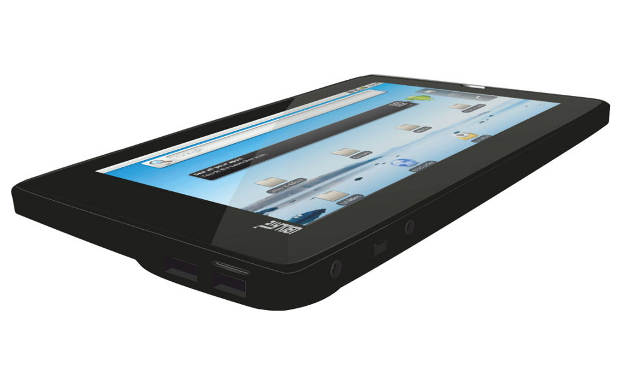
Yes sir, just like all other 3D cameras out there in the market, this particular model will also come with a twin-lens design so that it can shoot not only 3D images but stereoscopic 3D videos as well. Want to shoot regular stills without any eye-popping visuals? Not a problem, the Lumix DMC-3D1 does that equally well.

Just what kind of lenses does the Lumix DMC-3D1 pack? Well, for starters, it comes with 25mm ultra-wide angle lenses alongside 4x optical zoom that will deliver the outstanding capability to shoot high resolution 8-megapixel 3D photos and 1920 x 1080 60i high quality 3D HD video thanks to a side-by-side method. Thanks the kind of optics found in the Lumix DMC-3D1, you will be able to enjoy a wider range of composition possibilities as you have approximately 169% larger viewing space compared to that of 35mm cameras.
We used to have to make a choice – do we shoot photos or videos with a single camera? With the Lumix DMC-3D1, such a dilemma is no longer part of the equation, since it can do 2D photos and videos simultaneously. Shooting 12-megapixel 2D photos and recording 1920 x 1080i full HD 2D videos, you can always capture a particular moment in time for all immortality in two different formats, now how neat do you think that is?
Other hardware specifications include iA (Intelligent Auto) mode, MEGA O.I.S, AF Tracking, Intelligent Scene Selector, Face Recognition and Intelligent ISO Control, Intelligent Exposure and Intelligent Handheld Nightshot. Expect to see the Panasonic Lumix DMC-3D1 this coming December for $499.99.

(Source)